In a previous article, we explored three key trends that will shape communicators’ work in 2026:
- Narratives that are harder to land amid growing uncertainty.
- The revival of community-led communications bridging online and offline spaces.
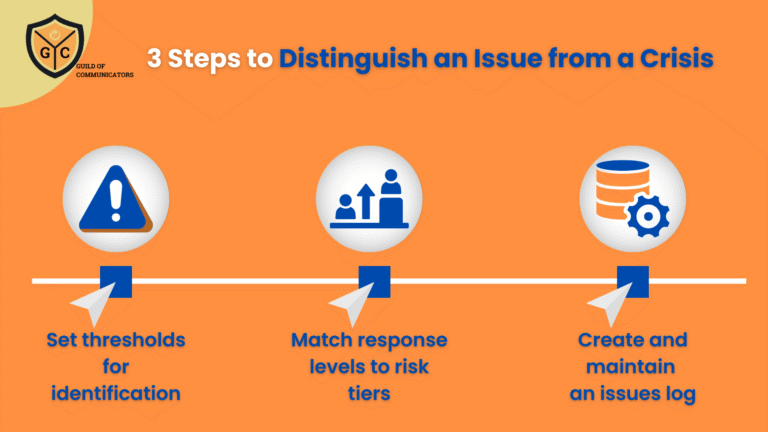
- The widening role of crisis and issues management as a shared responsibility across teams.
Of the three, community-led communications stands out as both a return to form and a tactical evolution. It calls for communicators to move from broadcasting messages to nurturing shared meaning.
Let’s focus together on what it means in practice, why it matters, and how communicators can build the right skillsets to deliver on this shift.
Understanding Community-Led Communications
Community-led communications is a structured approach to engaging audiences through participation, ownership, and shared purpose.
Unlike traditional engagement or “interactive” campaigns that focus on metrics of reach and response, community-led communication prioritises sustained dialogue, mutual value, and continuity. It extends beyond awareness to establish belonging and trust over time.
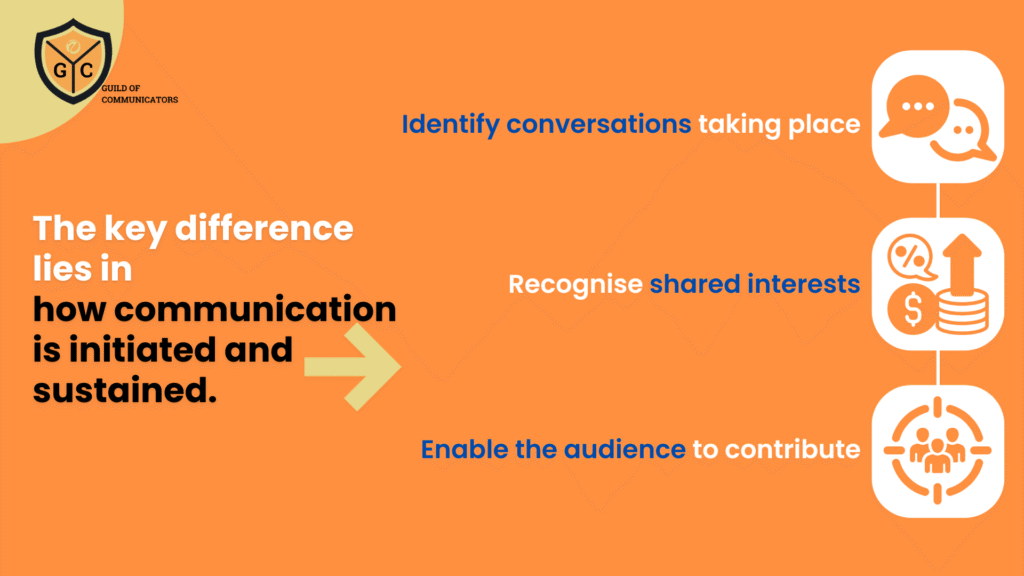
The key difference lies in how communication is initiated and sustained.
In a brand-led model, organisations decide what and when to communicate. In a community-led model, communicators identify the conversations already taking place, recognise shared interests, and enable the audience to contribute. The brand’s role becomes that of a facilitator, that means, ensuring coherence, accuracy, and alignment with the organisation’s purpose.
This shift requires communicators to develop new sensitivities: listening beyond the obvious, mapping influence within informal networks, and designing programmes that connect multiple touchpoints. These are tactical choices, but they rest on strategic intent: to make the brand part of its community’s shared space rather than an external voice trying to join in.
The Limits of Brand-Led Communications
When communicators continue to rely on top-down, brand-led approaches, they often miss the chance to build genuine relationships. These methods tend to prioritise message consistency and control, but in doing so, they risk reducing engagement to compliance.
Audiences increasingly expect authenticity and relevance, not instruction or repetition.
In many current fragmented environments, audiences self-organise around shared interests, values, or causes. A purely top-down campaign can feel distant or impersonal when the brand does not recognise these micro-communities. The outcome is often diminishing returns on engagement: well-produced content but low resonance, high impressions but minimal conversion, and conversations that do not sustain themselves once the campaign ends.
Communicators who persist with traditional models may also find it harder to maintain credibility. A one-way approach limits feedback loops and slows responsiveness.
In contrast, community-led communication creates a more adaptive cycle — one where feedback is built into design, and where audiences feel seen and heard. The difference is not only tactical but relational: one seeks attention, the other builds connection.
Building a Community-Led Programme
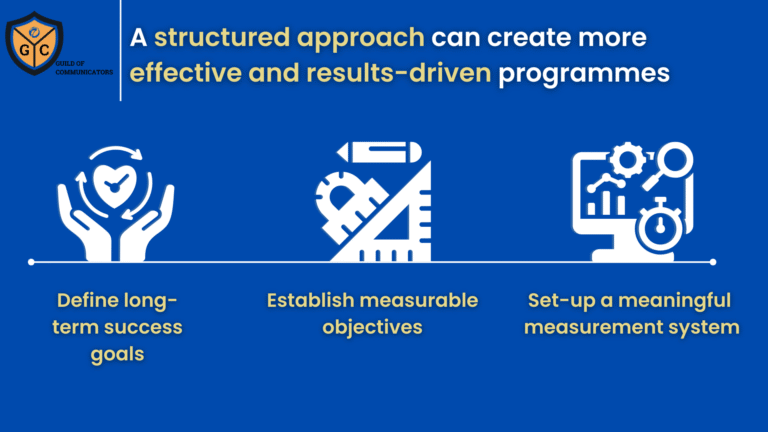
A community-led programme requires three fundamentals: shared context, clear structure, and sustained participation.
1. Shared context:
Communicators need to start by understanding what connects their audiences. This means identifying shared challenges, aspirations, or values that go beyond product or service attributes. It requires research that captures both data and sentiment — what people care about, how they express it, and where they gather.
2. Clear structure:
Communities thrive when participation feels purposeful. This involves setting clear expectations — who contributes, how discussions are guided, and how feedback is used. For internal communicators, this could take the form of structured feedback channels. For external audiences, it might mean customer/user councils, advisory groups, or membership-style platforms.
3. Sustained participation:
Communities need continuity. Communicators should plan beyond campaigns, designing communication rhythms that build familiarity and trust. This might mean alternating between high-visibility activities and quieter, ongoing engagement. The key is to balance visibility with substance — ensuring the community knows the brand’s presence is consistent, not conditional.
When these fundamentals align, communicators can move from short-term engagement to long-term advocacy, turning audiences into collaborators who help shape outcomes.
The Psychology of Belonging and Local Relevance
Two psychological principles explain why community-led communication works: collective belonging and local relevance.
Collective belonging draws from social identity theory, which suggests people define themselves partly through group membership. When individuals feel aligned with a group, they internalise its values and norms. For communicators, this means messages resonate more when they reinforce shared identity, not individual persuasion. In practice, this might involve highlighting community achievements, co-created initiatives, or audience stories that reflect shared purpose.
Local relevance links to proximity bias and place attachment, which describe the human preference for what feels familiar or geographically or socially close. Even in digital spaces, people prioritise interactions that feel “near” — culturally, linguistically, or emotionally. Communicators can apply this by designing programmes that combine broad thematic appeal with locally resonant content. For example, regional case studies or language variants can anchor global campaigns in local realities.
Understanding these principles helps communicators move from generic messaging to contextual engagement. When audiences feel seen as part of something meaningful and close to them, communication gains both credibility and staying power.
Building the Skills to Deliver
Community-led communication is not a new idea, but it has regained urgency in a fragmented and fast-moving world. For communicators, it represents both a challenge and an opportunity: to move beyond transactional engagement and towards genuine connection.
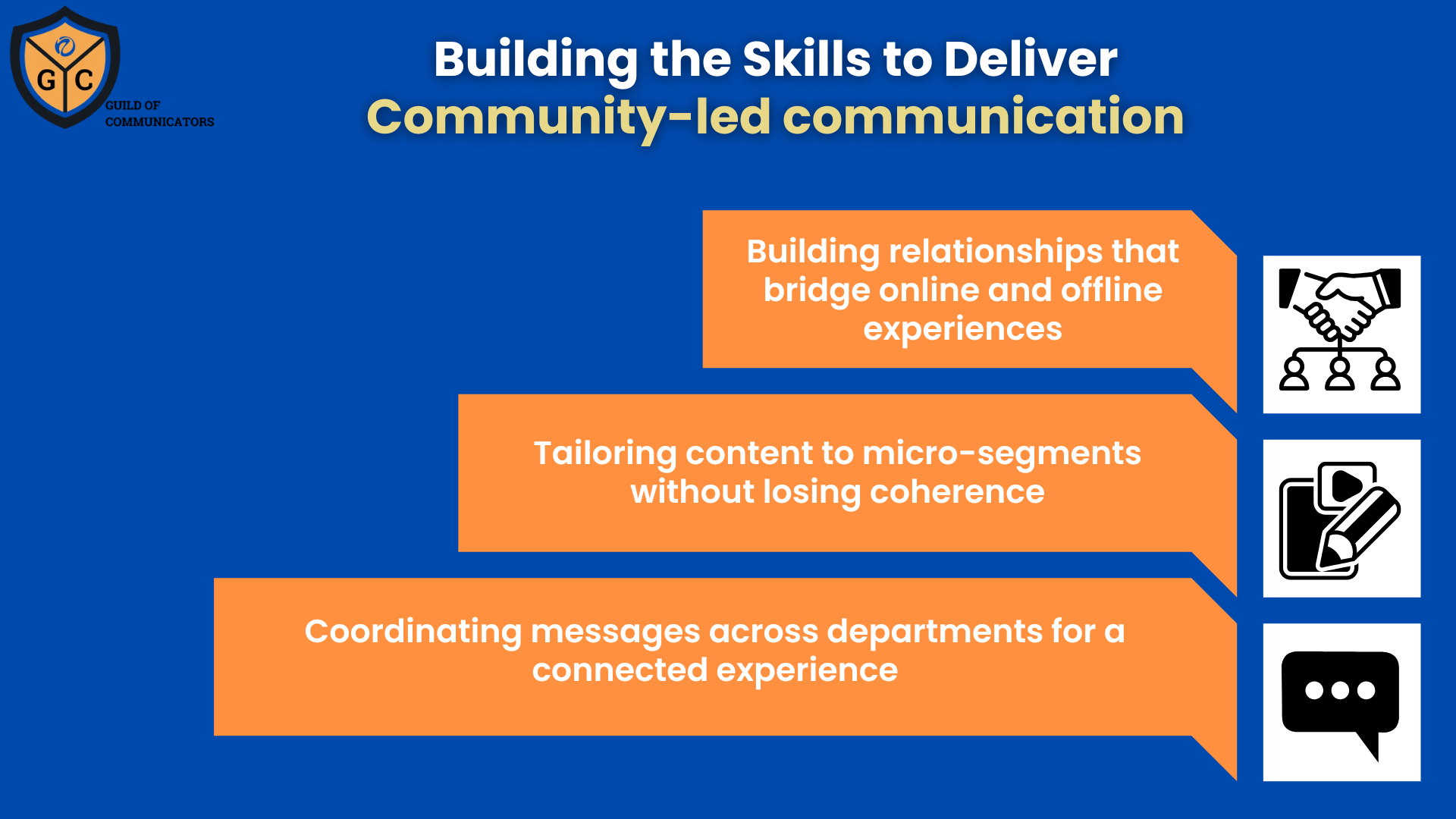
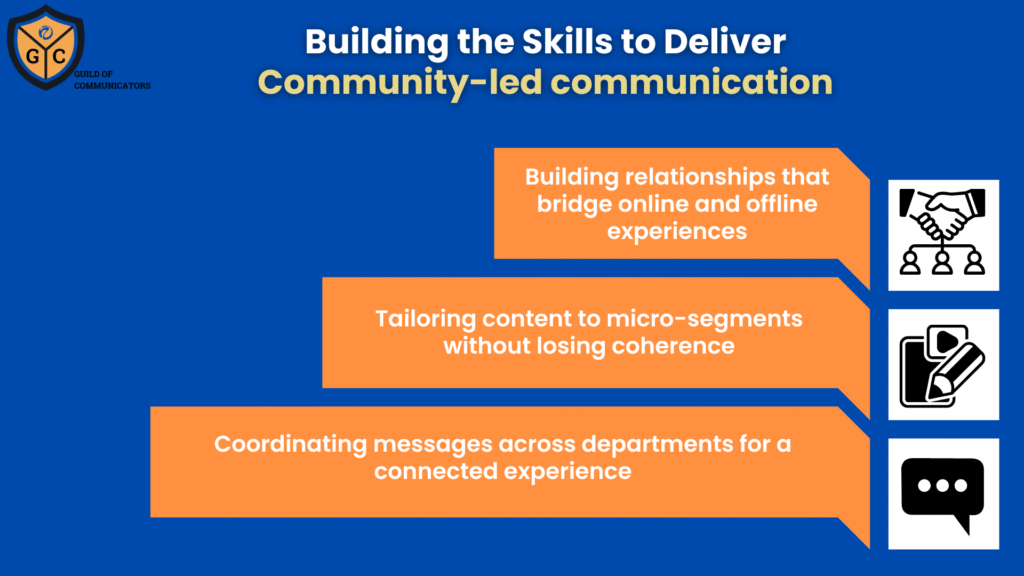
To become proficient in this area, communicators need to strengthen three skillsets:
1. Building relationships that bridge online and offline experiences
Strategic principle: Integrate presence across platforms and physical spaces.
Practical action: Create engagement frameworks that link digital touchpoints (e.g., social groups, webinars) with real-world activities (e.g., community events, focus sessions). This reinforces authenticity and makes participation tangible.
2. Tailoring content to micro-segments without losing coherence
Strategic principle: Design for consistency in purpose, not uniformity in content.
Practical action: Use a modular content strategy — where a single message is adapted across audience clusters while maintaining a shared narrative thread. This enables relevance without fragmentation.
3. Coordinating messages across departments for a connected experience
Strategic principle: Build internal alignment to sustain external trust.
Practical action: Establish shared KPIs or feedback dashboards across departments so every touchpoint — from marketing to customer service — supports the same communication intent. This builds continuity and reduces noise.
By focusing on these principles, communicators can position themselves as orchestrators of belonging — not by controlling every message, but by ensuring every interaction contributes to a cohesive whole.
The tactical shift lies in listening first, aligning intent with audience priorities, and creating platforms for participation. As communication continues to evolve in 2026 and beyond, the most effective communicators will not just inform communities — they will help them form.
*****
Ready to elevate your communications career? The Guild of Communicators is your essential hub for professional growth, offering a vibrant community and best-in-class resources.
- Connect Membership: Ideal for early-career communicators seeking a supportive peer network, over 300 foundational and intermediate courses, and monthly interactive group sessions.
- Elevate Membership: For ambitious professionals, this tier includes premium frameworks, immersive live online workshops, dedicated career coaching, and mentorship with senior industry leaders.
Discover your path to impact and accelerated career growth.
Join the Guild of Communicators today at www.gocommunicators.com.
(For students: If you’re a student, undergraduate or postgraduate, explore our special student referral programme to lock in your membership fee for the second year! Drop us an email to find out more)
——-
Subscribe to join over 1500+ communicators and brands getting value every Tuesday while reading A Communicator’s Perspective, our weekly newsletter.