For many communicators, the term “project management” conjures images of rigid spreadsheets, endless PowerPoint charts, and bureaucratic red tape that stifles the creative spirit.
There is a prevailing belief in our industry that creativity requires chaos. We think that great ideas are born from the adrenaline of a last-minute deadline. However, this mindset is not only incorrect; it is dangerous.
Without a robust project management framework, communicators are trapped in a reactive cycle. You are constantly firefighting, responding to the loudest demands, and struggling to keep your head above water.
In this state, strategic thinking becomes impossible.
The shift from chaos to control requires you to stop viewing project management as an administrative burden and start viewing it as an essential professional discipline. It is the safety net that allows your creativity to succeed and your strategy to survive contact with reality.
The Myth of Creative Chaos
The challenge begins with a cultural acceptance of disorder.
“Project management often feels overwhelming with competing deadlines, stakeholder expectations, and limited resources,” yet we often wear this busyness as a badge of honour. We confuse activity with productivity. The reality is that “projects often derail when attention shifts to urgent tasks at the expense of strategic goals.”
When you operate without a project mindset, you rely on heroic effort to get things done. You stay late to fix a vague brief or rush to produce a report because there was no schedule.
This “creative chaos” is unsustainable. It leads to mistakes, missed opportunities, and a constant, low-level anxiety that erodes your passion for the work. The challenge is to recognise that chaos is not a prerequisite for creativity; it is an obstacle to it.
Burnout and Missed Strategic Goals
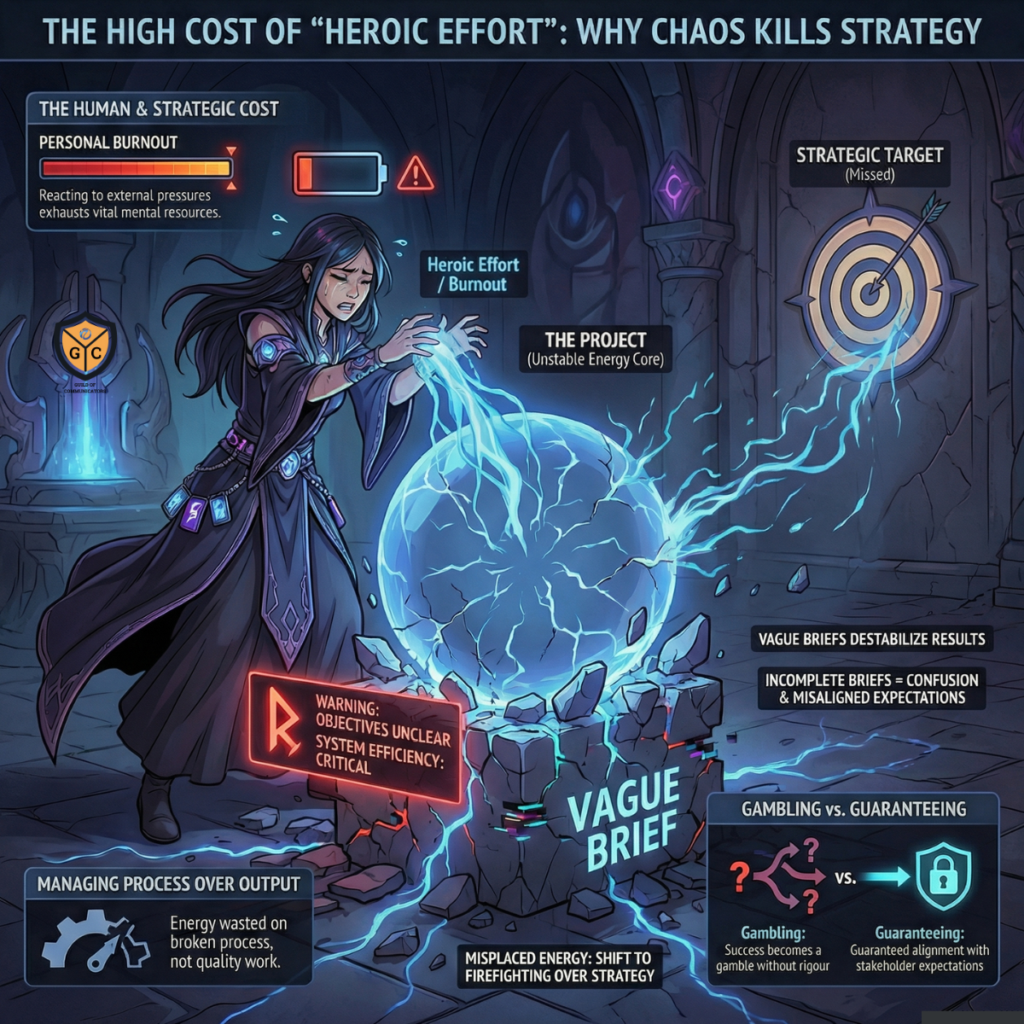
The cost of this chaotic approach is high. First and foremost, it leads to burnout. When you are constantly reacting to external pressures rather than driving a defined plan, you exhaust your mental resources. You spend your energy managing the process rather than improving the output.
Secondly, the work suffers. “A vague or incomplete brief can lead to confusion, misaligned expectations, and missed opportunities.” When the team isn’t clear on the project’s goals because the setup was rushed, the results often fall short. You might deliver the campaign, but if it doesn’t solve the business problem because the objectives weren’t locked down, the effort is wasted.
Without control, you are essentially gambling that your hard work will align with stakeholder expectations, rather than guaranteeing it through rigour.
Structure Creates the Freedom to Innovate
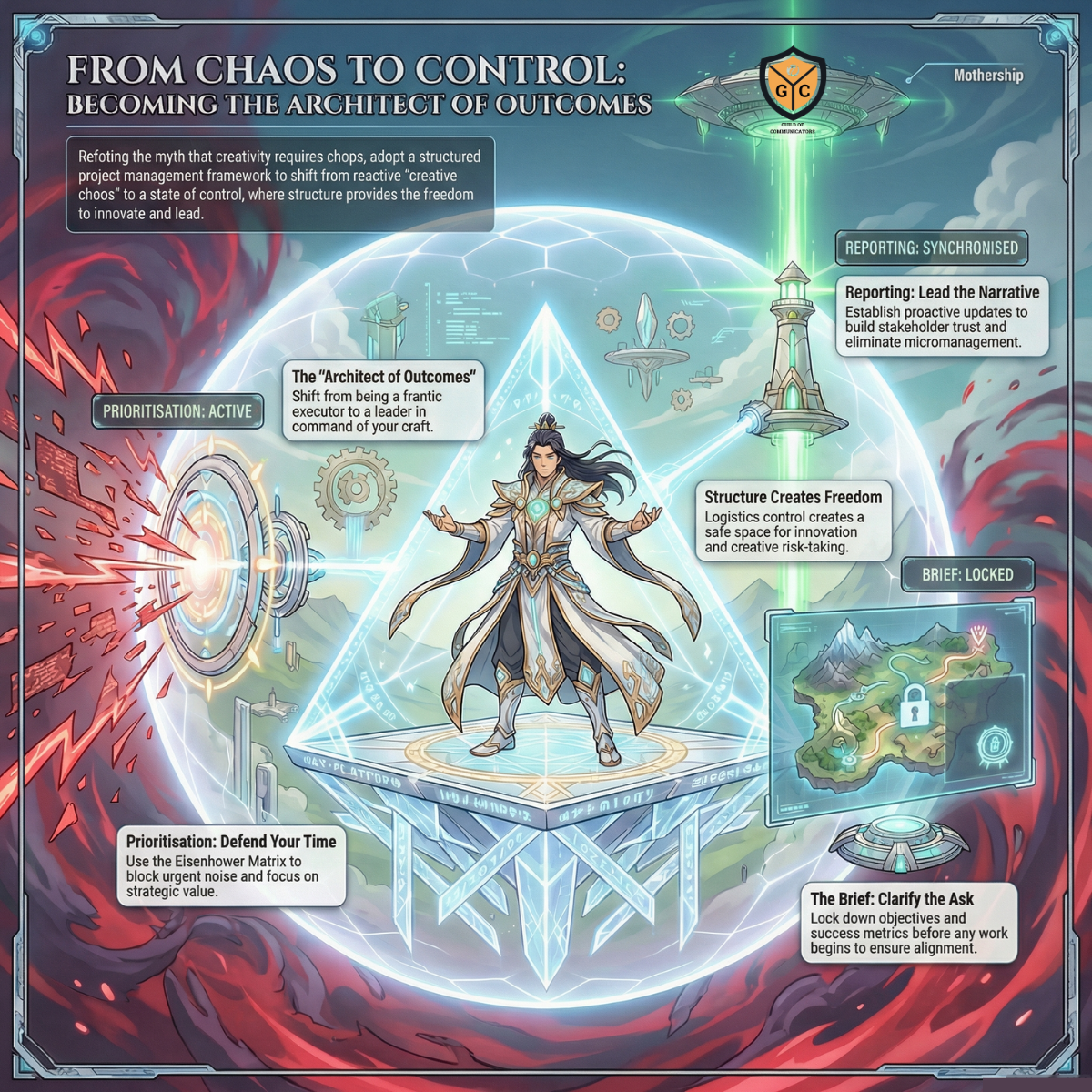
The paradox of project management is that structure creates freedom.
When you have “a well-defined brief that sets the tone, outlines objectives, and clarifies roles,” you remove the cognitive load of wondering what to do. This frees up your brain to focus entirely on how to do it brilliantly.
Structure protects your time. By establishing “early, clear reporting,” you ensure stakeholders stay informed and calm, reducing the likelihood of micromanagement. When the logistics are under control—when you know exactly what is due, who is doing it, and what success looks like—you create a safe space for innovation. You can take creative risks because the foundation of the project is secure.
Project management turns you from a frantic executor into a composed leader who is in command of their craft.
Why We Resist Structure and Planning
Why do we resist this shift?
Psychologically, we fall victim to the “Planning Fallacy”—the tendency to underestimate the time and complexity of future tasks. We assume we will have more time and clarity tomorrow than we do today. We avoid the “boring” work of scoping and briefing because we crave the dopamine hit of “doing” the work.
Additionally, many communicators resist structure because they fear it feels corporate or restrictive. We worry that defining every step will kill the magic. However, this is a misunderstanding of what structure does. It does not dictate the answer; it defines the problem. Overcoming this resistance requires a shift in identity: you are not just a creative; you are an architect of outcomes.
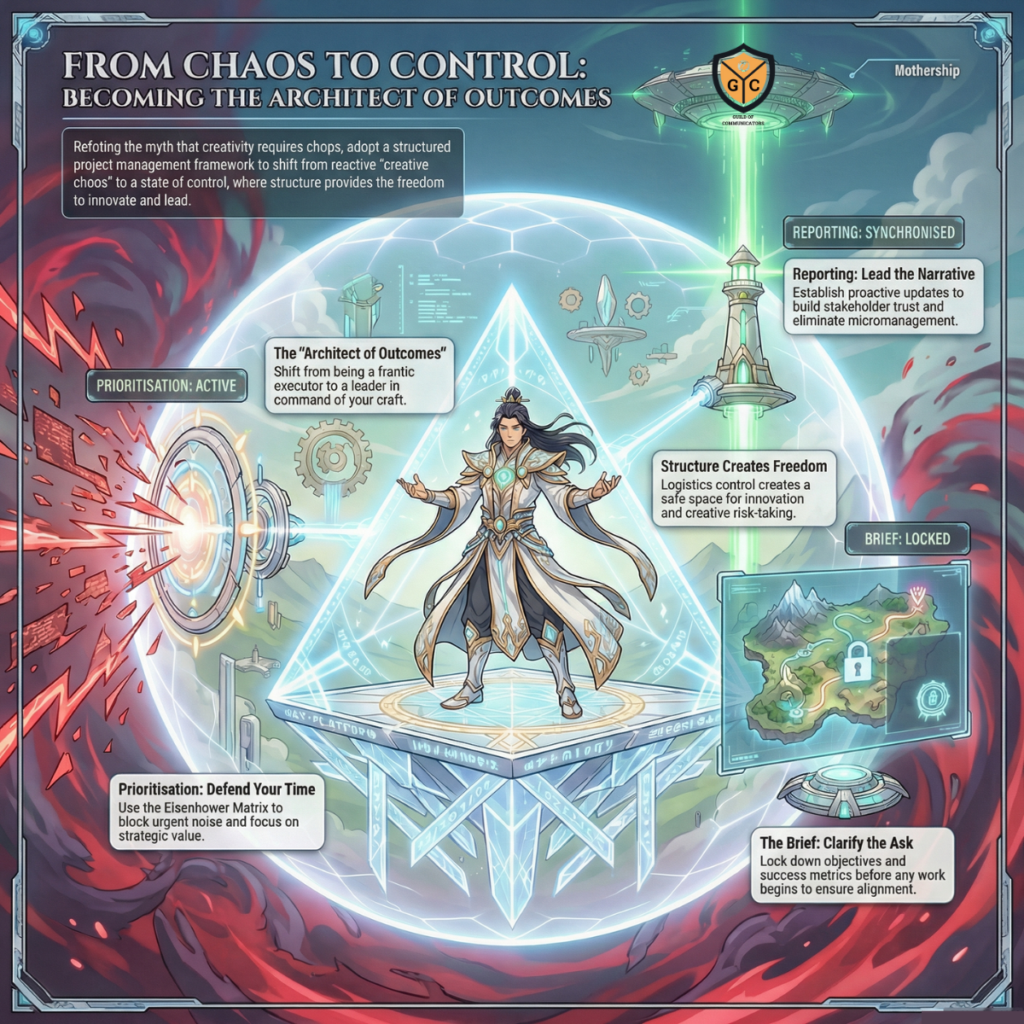
Three Pillars of a Project Mindset
Adopting a project management mindset is the single most effective way to elevate your career. It allows you to escape the trap of reactive busyness and step into a role of strategic leadership.
To move from chaos to control, you must build your practice on three non-negotiable pillars.
1. Defend Your Time (Prioritisation). You cannot do everything. “Start by mastering prioritisation” using tools like the Eisenhower Matrix. This framework forces you to distinguish between the ‘Urgent’ (the ringing phone) and the ‘Important’ (the strategic plan). By ruthlessly defending your time against low-value noise, you ensure that your energy is directed toward the “components that provide the highest output or align most closely with the project’s value.”
2. Clarify the Ask (The Brief). Never start work without a clear definition of success. “Create a brief that covers all key aspects: objectives, deliverables, timelines, and individual responsibilities.” If a stakeholder gives you a vague request, push back until it is specific. Be the guardian of clarity. “When the team understands the bigger picture and their role within it, they can execute with confidence and purpose.”
3. Lead the Narrative (Reporting). Do not let the project be a black box to your stakeholders. “Establish a reporting plan at the outset.” Define the key metrics and the frequency of updates before the work begins. By proactively sharing progress, challenges, and wins, you control the narrative of the project. This “proactive approach ensures transparency and builds trust,” positioning you as a leader who is accountable and in control.
When you control the project, you control the outcome. You stop hoping for success and start engineering it.
The Guild of Communicators is merging with and integrating into the We Are Brand Utility organisation: read more in our article here. If you are interested in the topics of Narrative Intelligence, Digital Subject Stewardship, Narrative Autonomy and Authoritative Source, subscribe to our newsletter through this form: