Each year, communicators face the same challenge: how to plan, adapt, and stay relevant in an environment that keeps shifting.
Economic cycles, technological developments, regulatory adjustments, and evolving consumer behaviour all influence how messages are received and acted upon. Yet amid these rapid shifts, some patterns remain consistent. Change rarely occurs overnight. It often requires a trigger—a catalyst that turns gradual movement into visible transformation.
Understanding this balance between what changes and what doesn’t is key to anticipating what comes next. Communicators who can interpret both the signals of movement and the stability of structure will not only stay ahead but also make better decisions about where to focus their time and resources in 2026.
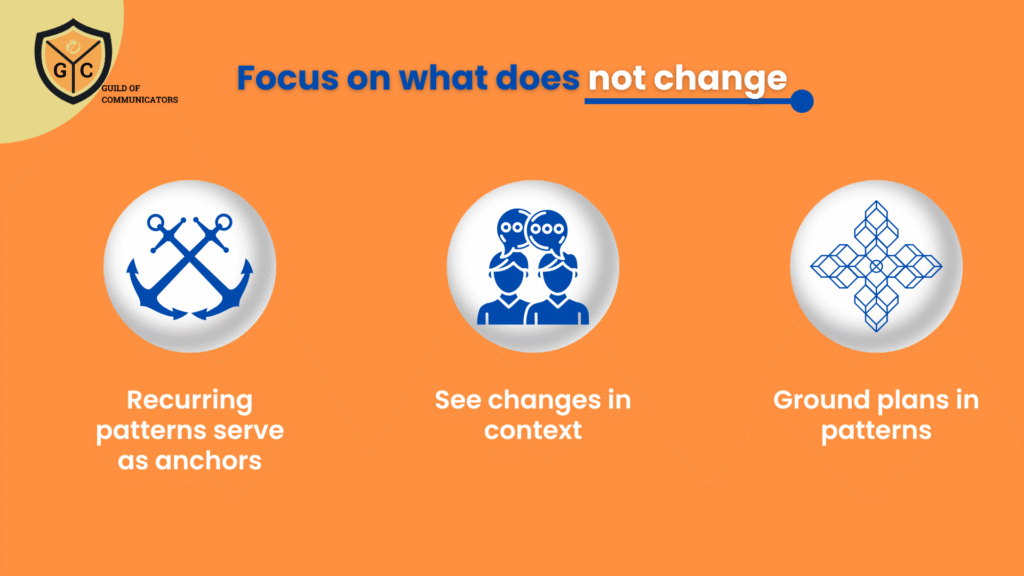
Anchors in Motion – What Doesn’t Change in Communications
It’s easy to be distracted by emerging tools, platforms, or trends that promise to redefine how communications work. But the fundamentals of how organisations plan and deliver messages have not changed as much as it might appear.
Businesses continue to operate in quarterly cycles. Budgets are still front-loaded within the first three quarters of the year. Most organisations plan their spending in a mix of short-term activations and long-term programmes. And consumer confidence continues to dictate purchasing behaviour—when people feel secure, they spend more freely; when uncertainty rises, they become selective.
For communicators, these recurring patterns serve as anchors. They help us interpret short-term fluctuations in context. Instead of reacting to every new platform update or public trend, communicators can ground their plans in these enduring rhythms.
Doing so helps separate genuine change from temporary noise—making strategy more stable, predictable, and credible.
Uncertainty and Harder-to-Land Narratives
The first trend for 2026 continues from previous years but has deepened in impact: the growing difficulty of creating narratives that resonate in an increasingly uncertain world.
Across industries, uncertainty now operates on multiple levels. Regulatory environments are shifting faster than many organisations can adapt. Economic conditions fluctuate across regions. And technological advancements—from AI-driven automation to content production—are rewriting how people interact with information. Together, these create an environment where messages that once landed cleanly now face friction and fragmentation.
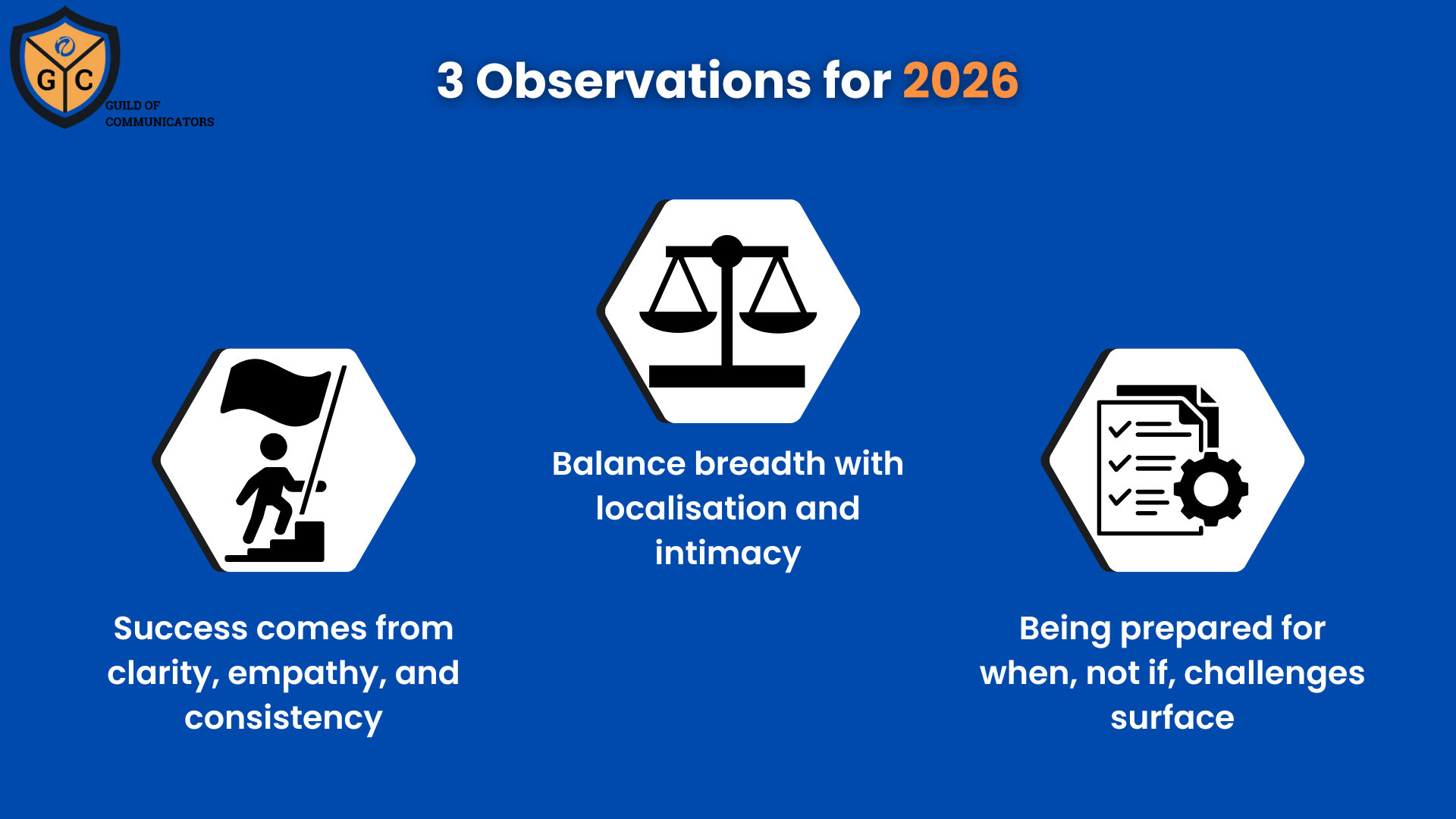
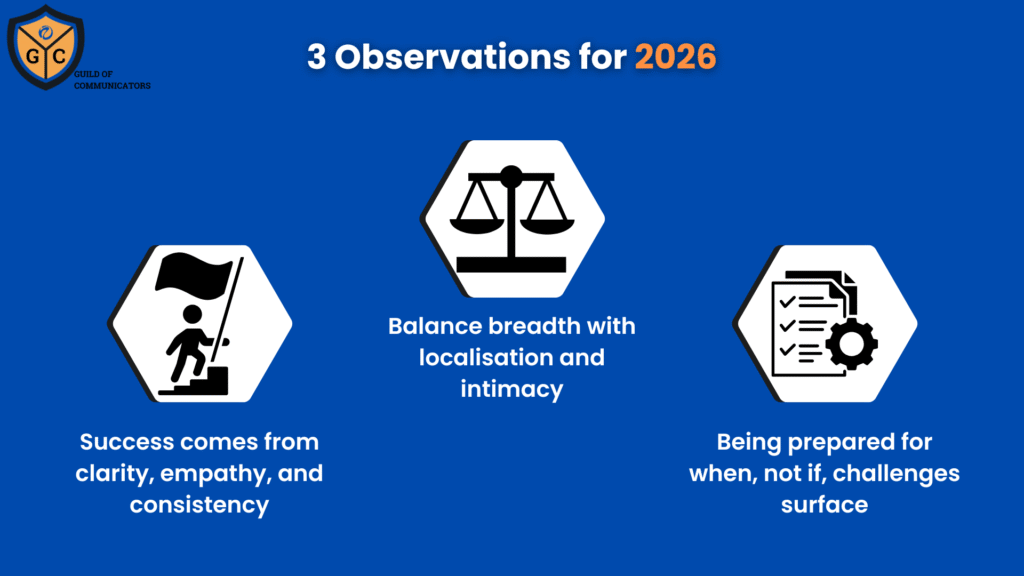
For communicators, this means that success in 2026 will not come from louder or more frequent messaging. It will come from clarity, empathy, and consistency.
The challenge is to communicate stability and confidence amid unpredictability—helping audiences make sense of complexity and trust the brand’s intent.
The Revival of Community-Led Communications
The second trend shaping 2026 is the renewed importance of communities—both digital and physical.
Over the past few years, brands have shifted towards mass personalisation, algorithmic targeting, and individual-level data. But the pendulum is swinging back.
People are increasingly seeking collective belonging. The rise of hybrid work, local activism, and shared-interest groups has created opportunities for brands and organisations to engage communities more directly. Community-led communication means designing programmes that connect broad audiences while still retaining a sense of local relevance.
For communicators, this calls for new skillsets: building relationships that bridge online and offline experiences, tailoring content to micro-segments without losing coherence, and coordinating messages across departments so that each point of contact feels connected.
In 2026, communicators who understand how to balance breadth with intimacy will see stronger engagement and advocacy.
The Psychology of Inaction – Why People Default to Doing Nothing
When faced with constant uncertainty, many decision-makers and audiences adopt a “wait-and-see” approach. This tendency is not unique to organisations; it is a well-documented human response.
Three psychological concepts help explain why.
First, status quo bias leads people to prefer maintaining existing conditions, even when alternatives might be better. Change introduces risk, and risk creates discomfort. Second, decision paralysis occurs when there are too many options or too much information, leading to hesitation rather than action. Third, uncertainty avoidance reflects how individuals and institutions manage ambiguity—often by over-analysing or delaying action until the environment feels more predictable.
For communicators, recognising these biases is critical. It explains why well-researched, well-structured plans may still face resistance. The solution lies in simplifying decision points, framing change in terms of controlled outcomes, and using consistent, clear messaging to build trust.
Issues and Crises Management as a Broad Discipline
The third trend is the mainstreaming of issues and crises management. Once seen as a specialised area for certain industries or roles, it has now become a universal expectation for all communicators.
In 2026, the incubation period between an internal issue and a public-facing crisis continues to shorten. The acceleration of information flow means that reputational risks can emerge within hours rather than days. Small operational issues, employee concerns, or customer complaints can quickly attract attention across stakeholder groups.
Communicators must therefore integrate risk awareness into everyday planning. This involves scenario mapping, quick-response planning, and internal collaboration with HR, operations, and legal teams. The goal is to manage issues before they escalate, ensuring consistency in message, tone, and action.
Crisis management is no longer about reacting—it is about being prepared for when, not if, challenges surface.
The year ahead will test communicators on both adaptability and discipline. While the environment continues to shift, the fundamentals remain steady. The organisations that succeed will be those that can move quickly without losing clarity—anchoring their decisions in principles that withstand change.
For communicators, 2026 offers an opportunity to build credibility by demonstrating both foresight and calm. The task is not to predict every trend, but to interpret and respond effectively. When you can distinguish between what moves and what stays constant, you become the steady hand that guides others through uncertainty.
*****
Ready to elevate your communications career? The Guild of Communicators is your essential hub for professional growth, offering a vibrant community and best-in-class resources.
- Connect Membership: Ideal for early-career communicators seeking a supportive peer network, over 300 foundational and intermediate courses, and monthly interactive group sessions.
- Elevate Membership: For ambitious professionals, this tier includes premium frameworks, immersive live online workshops, dedicated career coaching, and mentorship with senior industry leaders.
Discover your path to impact and accelerated career growth.
Join the Guild of Communicators today at www.gocommunicators.com.
(For students: If you’re a student, undergraduate or postgraduate, explore our special student referral programme to lock in your membership fee for the second year! Drop us an email to find out more)
——-
Subscribe to join over 1500+ communicators and brands getting value every Tuesday while reading A Communicator’s Perspective, our weekly newsletter.