
You have done the work. You have established a clear brand positioning, crafted consistent and relevant key messages, and built a strategy focused on measurable outcomes. You have created, in your view, a brilliant communication plan.
Yet, the most critical phase is not in the plan’s creation, but in its approval.
No matter how strategically sound or creatively inspired your plan is, it is destined to fail if it does not secure the understanding, input, and active support of your key stakeholders.
Stakeholder management is not an administrative hurdle to clear at the end of the process; it is a core professional competency that is woven into the entire strategic workflow. For the early-career communicator, learning how to effectively navigate this landscape is what turns a good plan on paper into a successful reality.
Understanding Why Your Plan Is Met with Resistance
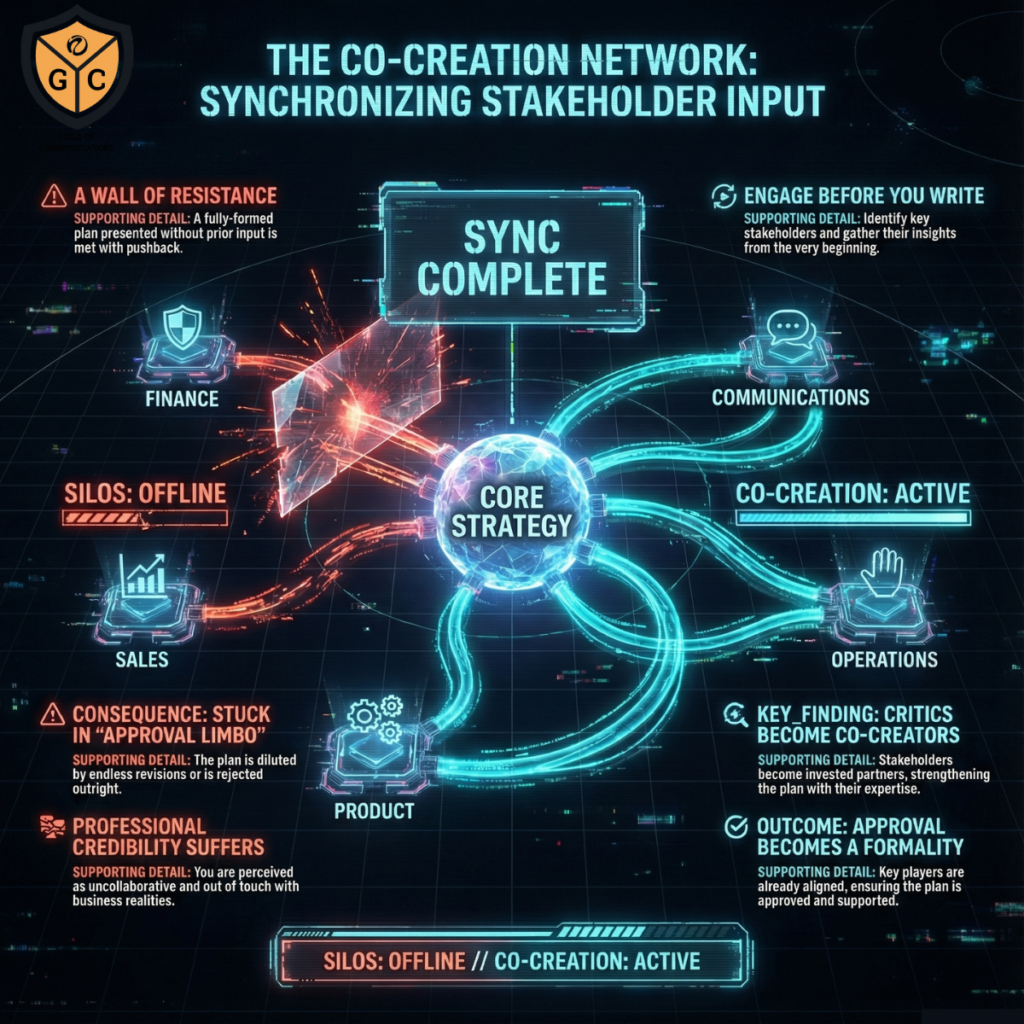
It is a scenario many communicators know well. After weeks of dedicated work, you present your meticulously crafted communication plan in a key meeting. You expect consensus and excitement, but instead, you are met with a wall of resistance.
The head of sales questions your audience priorities.
The product lead disagrees with your messaging.
The finance director raises concerns about the budget.
This resistance can feel like a personal rejection of your work, but it is rarely about you or the quality of your ideas. More often, it is a natural reaction to being excluded from the creation process.
When stakeholders are presented with a fully formed plan they have had no hand in shaping, they view it through the lens of their own priorities and concerns. They have not been part of the strategic journey—the research, the debates, the decisions—that led you to your conclusions.
As a result, they see potential problems, not possibilities. They perceive your plan not as a shared solution, but as an initiative being imposed upon them, bringing with it extra work or a change to their established workflows.
This immediate pushback is a symptom of a process that began in isolation, not collaboration.
Recognising How Poor Engagement Undermines Your Success
Failing to engage stakeholders effectively from the beginning has severe and lasting consequences that can undermine your success long before a campaign ever launches.
The most immediate impact is that your plan becomes stuck in ‘approval limbo’, subject to endless rounds of feedback and revisions. The strategic clarity you worked so hard to build is chipped away with each compromise, resulting in a final plan that is a diluted, committee-designed version of your original vision.
In the worst-case scenario, the plan is rejected outright, wasting weeks of your time and effort.
The damage extends beyond a single project. When you consistently fail to secure buy-in, your professional credibility suffers. You may be labelled as uncollaborative, naive to the realities of the business, or out of touch with the objectives of other departments. This reputation makes it progressively harder to get future initiatives approved, as stakeholders will anticipate a difficult and disconnected process. You become isolated, and your function is seen as a peripheral service rather than an integrated strategic partner.
Ultimately, poor stakeholder engagement limits your ability to do impactful work and stalls your professional growth within the organisation.

Capitalising on the Power of a Collaborative Approach
When you shift your approach from seeking approval to fostering collaboration, the entire dynamic changes.
By engaging stakeholders early and consistently, you turn potential critics into your strongest advocates. When you ask for their input from the start, they become co-creators of the plan, investing their own expertise and perspective into its success. Their feedback, rather than feeling like criticism, becomes an invaluable tool that strengthens your strategy, uncovers blind spots you might have missed, and ensures the final plan is robust and realistic.
This collaborative process builds trust and creates a powerful sense of shared ownership. By the time you reach the formal presentation stage, there are no surprises.
The approval meeting transforms from a tense negotiation into a simple formality, as the key players are already aligned and invested. This not only ensures your plan is green lit but also makes the execution phase significantly smoother, as you have a coalition of allies across the organisation ready to support your efforts.
Professionally, this positions you as a strategic leader—someone who can listen, build consensus, and unite different parts of the business behind a common goal.
Exploring the Psychological Barriers to Gaining Buy-In
To become effective at stakeholder management, we must first understand the psychological barriers that make it so challenging.
From the communicator’s perspective, there is often a powerful sense of ownership and perfectionism. We become attached to the plans we create and can view feedback as a personal critique of our competence. This can lead to a fear of sharing work that is still in progress, as we want to present a ‘flawless’ final product. This instinct, while well-intentioned, is what leads to creating plans in a silo and sets the stage for resistance.
From the stakeholder’s perspective, their world is governed by their own goals, pressures, and key performance indicators. A communication plan presented out of the blue can feel like an interruption or an additional burden that does not clearly help them achieve their objectives. They may also experience a natural skepticism toward ideas that were ‘not invented here’. They trust their own expertise and may instinctively resist a strategy they had no part in developing.
Understanding these psychological drivers—your own desire for perfection and their need for inclusion and relevance—is the first step to overcoming them.
Applying Three Principles to Win Over Your Stakeholders
Learning to manage stakeholders effectively is about recognising that a communication plan is not a solo performance but a collaborative achievement. The process of building consensus is just as important as the strategic thinking that goes into the document itself.
By shifting your mindset from presenting and defending to listening and co-creating, you transform a potentially adversarial process into a powerful alliance-building opportunity.
Building a communication plan that gets approved and championed requires a proactive and inclusive approach. Instead of treating stakeholders as a final hurdle, integrate them into your process from the very beginning with these three principles.
- Engage Stakeholders Early and Inclusively. Do not wait until you have a draft to start conversations. Before you write a single word of your plan, identify your key stakeholders and meet with them. Ask about their objectives for the coming quarter, their biggest challenges, and what success would look like from their perspective. Use these conversations to gather insights that will inform your strategy. This approach makes them feel valued and ensures your plan is aligned with their needs from day one, turning them into partners rather than judges.
- Communicate Your Plan in Their Language. When you present your strategy, frame it around the goals and priorities of your stakeholders. Avoid getting lost in communication jargon. Instead of focusing on metrics like ‘engagement rate’ or ‘share of voice’, connect your plan directly to the business outcomes they care about. Explain how your media campaign will generate qualified leads for the sales team or how your internal communication plan will support the HR team’s employee retention goals. Presenting your plan as a solution to their problems makes it immediately relevant and valuable.
- Treat Feedback as a Tool for Improvement. Position feedback not as criticism, but as a crucial contribution to making the plan stronger. When a stakeholder raises a concern, listen actively and show that you value their perspective. Ask clarifying questions to fully understand their point of view and be genuinely willing to make adjustments based on their expertise. When stakeholders see that their input is taken seriously and can directly influence the final outcome, they become more invested in the plan’s success and are far more likely to become its champion.
This skill is what will separate you as a strategic leader. It demonstrates an understanding that great ideas are only powerful when they are embraced by the organisation. Make stakeholder collaboration the cornerstone of your planning process, and you will not only create stronger, more effective strategies but also build the trust and credibility needed to lead significant and impactful work throughout your career.
To help you navigate the journey from fragmented messaging to strategic impact, I have designed an exclusive infographic. Complete the form below to join A Communicator’s Perspective—our weekly newsletter for growth-minded professionals—and receive this essential infographic directly to your inbox.