If a clear brand positioning is the strategic foundation of your work, then key messages are the pillars you build upon it.
Positioning is the internal, guiding idea of what your brand stands for; key messages are the specific, audience-facing points that bring that idea to life. They are the tangible expression of your strategy, delivered through every press release, social media post, and internal announcement.
However, for these messages to be effective, they must possess two non-negotiable qualities: consistency and relevance. Consistency ensures that your brand speaks with one voice, building recognition and trust over time. Relevance ensures that your message connects with the needs and interests of your audience, earning their attention in a crowded landscape.
For the communicator, mastering the discipline of creating and deploying consistent and relevant messages is the key to transforming your positioning from an abstract concept into a powerful tool of influence.
Understanding Why Your Messages Feel Fragmented
The modern communication landscape can be complex and fragmented. A communicator is expected to manage multiple channels simultaneously, from LinkedIn and Meta social media platforms to the corporate blog and media outreach, each with its own tone and audience expectations.
The primary challenge is maintaining message consistency across these disparate platforms while also ensuring each communication is relevant to its specific context. Many communicators struggle with this balancing act, leading to a brand voice that feels disjointed or content that fails to resonate.
This struggle is intensified by the relentless pressure to create a high volume of content quickly. When the focus is on filling the content calendar, it is easy to lose sight of the overarching strategy. A message for a social media post might be crafted in isolation from a press release issued on the same day, resulting in subtle but damaging inconsistencies in tone or substance.
Furthermore, the effort required to deeply understand different audience segments and tailor content to be truly relevant to their pain points is often sacrificed for the sake of speed and efficiency. The result is a stream of communication that, while active and visible, lacks the strategic coherence needed to make a lasting impact.
Recognising How Inconsistency and Irrelevance Undermine You
The long-term consequences of failing to maintain message consistency and relevance are severe. Inconsistent messaging is one of the fastest ways to erode audience trust. When your brand says one thing on its website and another on social media, it creates confusion and raises doubts about its authenticity. Over time, this fragmentation weakens your brand identity, making it impossible to build a clear and memorable perception in the minds of your customers. Your organisation’s voice becomes a cacophony rather than a clear signal, and your influence diminishes with every contradictory message.
Simultaneously, irrelevant messaging is simply ignored. If your content does not address your audience’s needs, answer their questions, or engage their interests, it is just noise. This wastes valuable time and resources, and it damages your professional credibility.
When you consistently produce content that fails to connect, stakeholders begin to see your function as ineffective—a cost centre that produces a lot of activity but delivers little in the way of meaningful results. Your efforts are perceived as tactical ‘busywork’ rather than strategic contributions, holding you back from advancing into roles that require a demonstrable ability to influence audience behaviour and perception.
Capitalising on the Power of Cohesive Communication
When you master the discipline of creating and deploying consistent and relevant messages, you unlock the true potential of your role. Consistent messaging, repeated over time across all channels, builds powerful brand recognition and reinforces your unique positioning.
It creates a sense of reliability and predictability that is the bedrock of trust. Your audience learns what to expect from you, and this familiarity makes your brand a dependable presence in their minds.
When this consistency is paired with genuine relevance, your communication transforms from a simple broadcast into a valuable conversation. By tailoring your core messages to resonate with the specific needs of your audience, you show that you understand and respect them. This builds strong, lasting relationships and earns you the permission to influence their perspective.
A communicator who can achieve this becomes an indispensable strategic asset. You are no longer just producing content; you are building community, shaping perception, and driving behaviour that directly supports organisational goals. This capability elevates your work from a tactical function to a strategic imperative, securing your place as a valued advisor in the business.
Exploring the Psychological Barriers to Positioning and Effective Messaging
Understanding the psychological factors at play can help explain why maintaining consistency and relevance is so challenging.
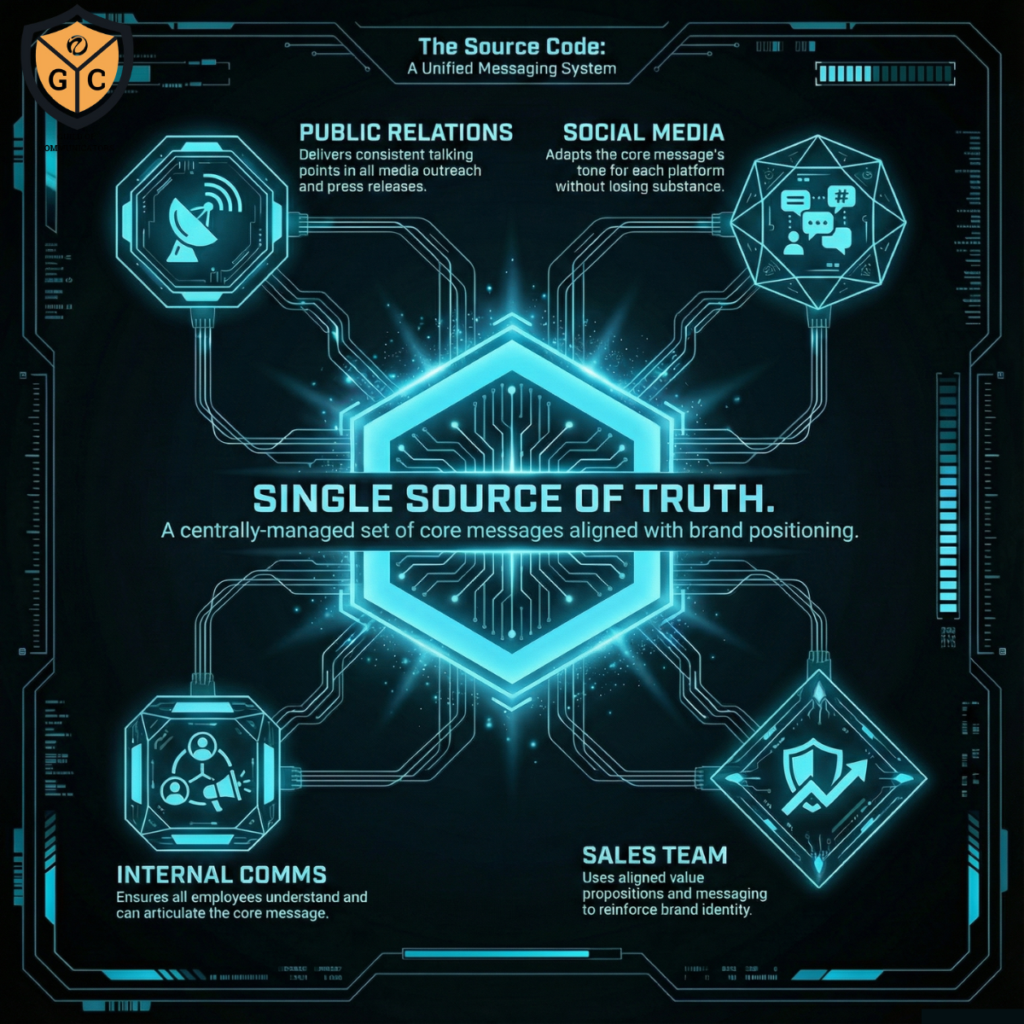
The first major barrier is the effect of organisational silos. In most companies, different teams manage different communication channels. The social media team, the PR team, the internal communications team, and the sales team may all be creating messages about the same topic, but from their own distinct perspectives and with their own priorities. Without a strong central function to align them, each silo naturally develops its own ‘dialect’, leading to the inconsistencies that confuse external audiences.
The second barrier is a cognitive bias known as the ‘curse of knowledge’. As a communicator, you are immersed in your organisation’s products, services, and internal jargon every single day. You understand its complexities and care deeply about its nuances. The ‘curse of knowledge’ is the difficulty in imagining what it is like for someone who does not have your level of background information. We unconsciously assume our audience shares our context and interests, which leads us to create messages that are irrelevant, overly technical, or focused on what we find important, not what they need to know. Overcoming this requires a conscious and deliberate effort to step outside our own perspective and see the world through our audience’s eyes.
Applying Three Principles to Create Messages That Influence
The ability to craft and manage key messages is a core competency that defines a strategic communicator. It is the practical application of the foundational positioning work, transforming an abstract idea into tangible influence. By committing to the disciplined practice of consistency and the empathetic pursuit of relevance, you ensure that your work is not just adding to the noise but is building a meaningful and valuable dialogue with the people who matter most to your organisation.
To overcome these challenges and turn your key messages into an asset, focus on three strategic principles that instil discipline and audience-centricity into your process.
- Develop Core Messaging Centrally. Before any campaign is launched, you must define and document a set of clear, core messages that directly support your brand’s positioning. These messages should be developed collaboratively with key stakeholders to ensure buy-in, but they must be managed centrally by the communication function. This document serves as the single source of truth for anyone creating content, ensuring that while the tone and format may be adapted for different channels, the fundamental points remain consistent. Make these core messages easily accessible and conduct regular training to ensure everyone understands how to use them correctly.
- Prioritise Audience Relevance Above All Else. Make deep audience understanding a non-negotiable part of your workflow. This goes beyond basic demographics. Conduct research, listen to social media conversations, talk to the sales team, and analyse data to uncover your audience’s true needs, preferences, and pain points. Use this insight to tailor your core messages so they connect with what your audience genuinely cares about. Frame your communication not around what you want to say, but around what your audience needs to hear. This relentless focus on relevance is what separates content that gets ignored from content that influences.
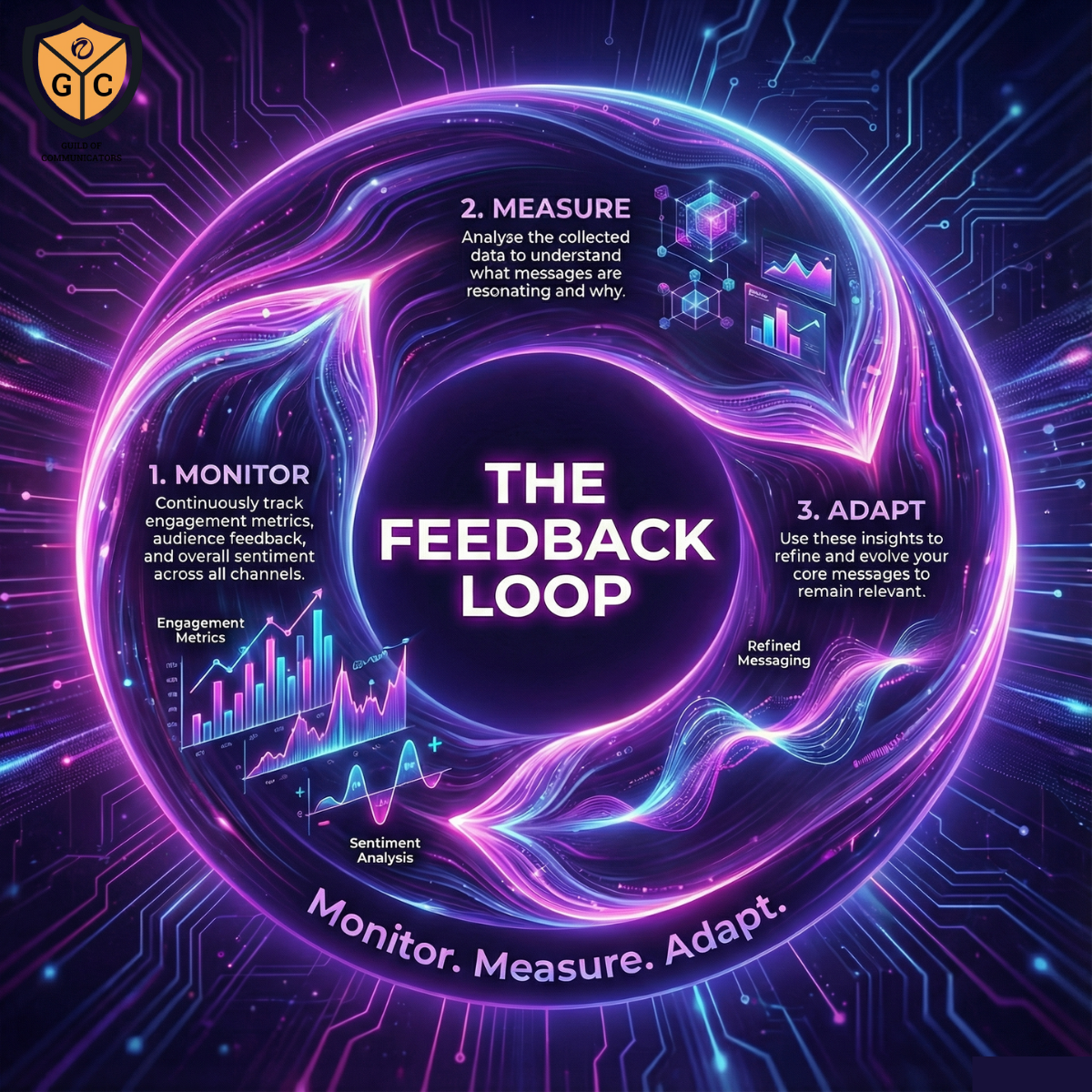
- Monitor, Measure, and Adapt Continuously. Your messages should never be static. The market changes, audience needs evolve, and your communication must evolve with them. Implement a system for continuously monitoring the effectiveness of your messaging. Track engagement metrics, listen to audience feedback, and analyse sentiment to understand what is resonating and what is not. Use this data not as a vanity report, but as a feedback loop to refine and adapt your messages over time. This iterative process ensures your communication remains sharp, relevant, and impactful.
This is not a one-time task but an ongoing professional commitment. As you grow in your career, your ability to guide an entire organisation to speak with a unified and resonant voice will become your greatest asset. It is a skill that builds trust, shapes markets, and establishes you as a leader who can translate high-level strategy into real-world results. Make this your focus, and you will build a career of enduring impact.
To help you navigate the journey from fragmented messaging to strategic impact, I have designed an infographic: The Blueprint for Demonstrable Influence.
This visual guide illustrates how Brand Positioning serves as your guiding core, supporting the twin pillars of Consistency and Relevance to build trust and earn attention. It also maps out the critical Feedback Loop needed to maintain influence over time, warning against the organisational silos that dilute your signal.
Complete the form below to join A Communicator’s Perspective—our weekly newsletter for growth-minded professionals—and receive this essential blueprint directly to your inbox.