Every communicator can be guilty of this.
It is tempting to focus on the visible aspects of our work: the clever social media campaign, the perfectly crafted press release, or the engaging company newsletter. These are the tangible outputs that demonstrate activity. However, before a single word is written or a campaign is launched, the most critical work must be done.
This is the work of defining your brand’s positioning—the unique space your organisation occupies in the market and, more importantly, in the minds of your audience.
Positioning is not a messaging exercise; it is the strategic foundation upon which all effective communication is built. It answers the fundamental questions of ‘what’ your brand is and ‘why’ it matters, providing the essential direction for ‘how’ you communicate it.
For communicators, understanding and championing this principle is the first step in evolving from a tactical executor to a strategic leader.
Rushing into Tactical Execution
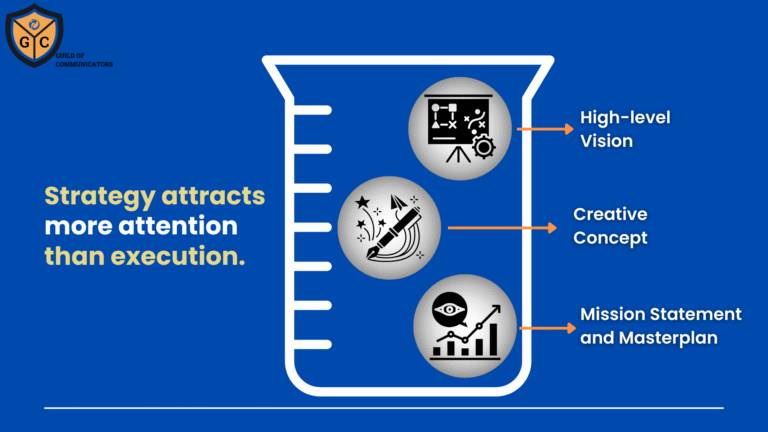
The pressure to produce is immediate and intense. You are often measured by the quantity and speed of your work—the number of posts published, articles placed, or emails sent. This environment creates a powerful bias towards action.
The challenge, therefore, is that communicators frequently jump straight into creating tactics and messages without a clear, agreed-upon positioning.
This rush to execution is understandable. You want to demonstrate your value and capability, and tangible outputs are the easiest way to do so. The process of defining positioning is abstract, time-consuming, and often involves difficult conversations with senior leadership. It doesn’t provide the instant gratification that comes from seeing your work ‘go live’.
As a result, the foundational work is either skipped entirely or is assumed to have been done by someone else. The communicator is handed a brief to ‘promote a new product’ or ‘raise brand awareness’ and immediately begins creating content, building a campaign on a strategic foundation that is, at best, unstable and, at worst, non-existent. This creates a cycle of reactive, short-term activity that lacks a strategic anchor, preventing any single effort from contributing to a cohesive brand narrative.
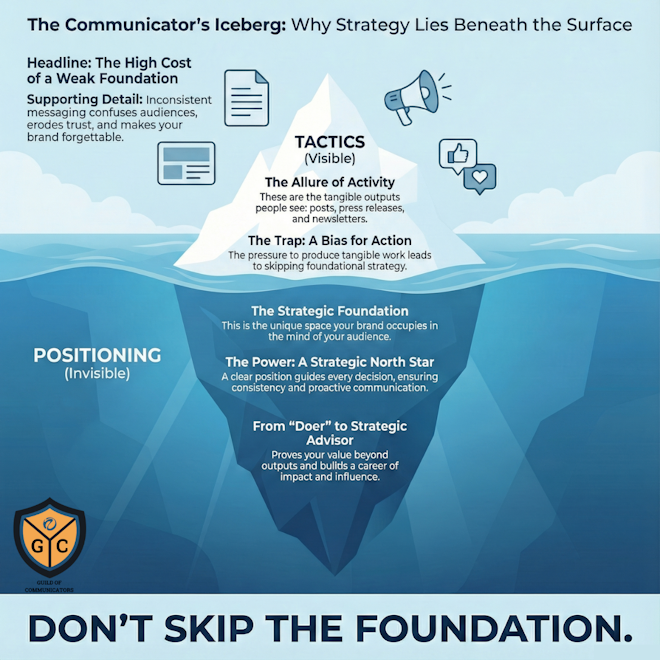
The High Cost of a Weak Foundation
Operating without a clearly defined positioning has significant and damaging long-term consequences, both for the organisation and for your career. When communication activities are not guided by a central strategic principle, they become fragmented.
One social media campaign might project a fun, youthful brand personality, while corporate communications adopt a formal, traditional tone. This inconsistency confuses your audience, erodes trust, and prevents the brand from establishing a memorable and distinct identity in a crowded market.
Without a strong positioning to set you apart, your messages become noise, easily lost among competitors who have a clearer sense of who they are.
For the communicator, the consequences are equally severe. When your work is not tied to a core strategy, its value is difficult to prove. You are seen as a tactical executor—a ‘doer’ who creates ‘stuff’—rather than a strategic thinker who contributes to the organisation’s goals. Your role becomes defined by the outputs you produce, not the outcomes you influence. This perception holds you back. You will struggle to gain a seat at the strategic table because you cannot articulate the ‘why’ behind your ‘what’. Over time, this can lead to career stagnation, where you are pigeonholed as a service provider rather than being recognised as an essential strategic advisor whose work builds and protects the organisation’s most valuable asset: its reputation.
The Strategic Power of Clear Positioning
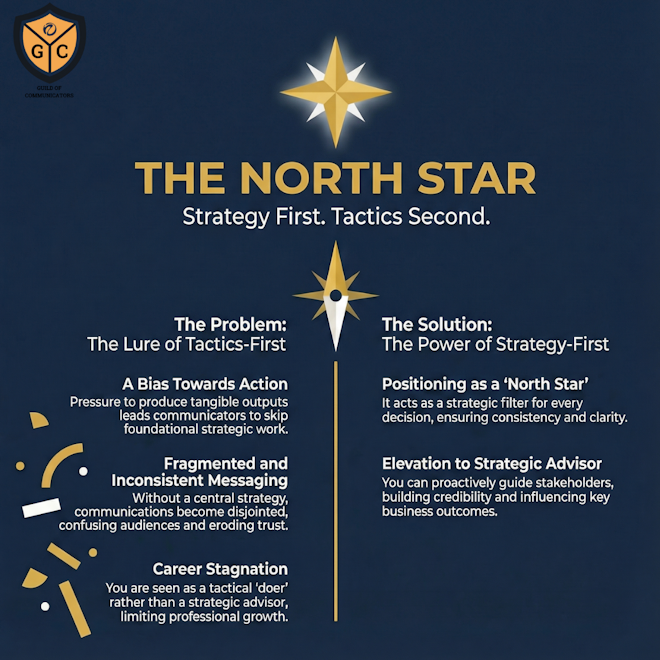
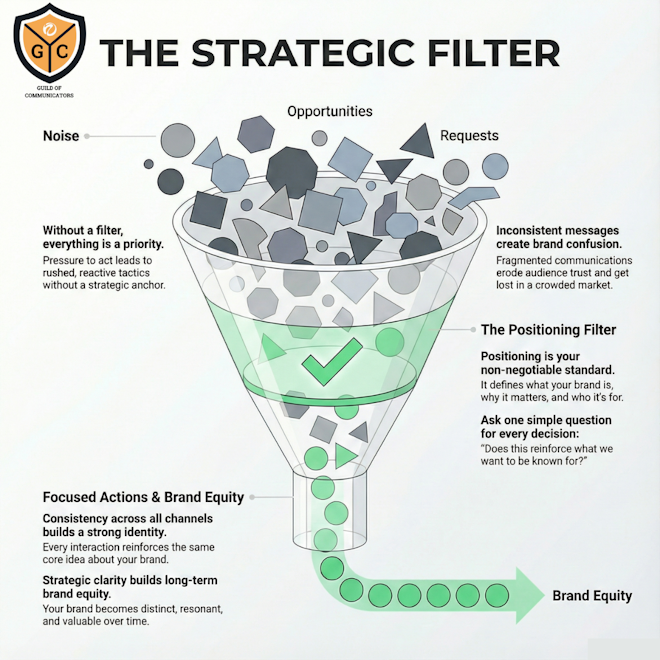
Conversely, when you insist on and operate from a foundation of clear positioning, the benefits are transformative. A well-defined positioning statement acts as a North Star for every communication decision. It provides a strategic filter through which you can evaluate every opportunity, tactic, and message.
Should we sponsor this event?
Does this partnership align with our brand?
Is this the right tone for this announcement?
The answers become clearer because you have a principle to guide you. This ensures a powerful consistency across all channels, reinforcing the same core idea about your brand in the mind of the audience with every interaction.
This strategic clarity empowers you to move from being reactive to proactive. Instead of just fulfilling requests, you can propose initiatives that actively strengthen the brand’s defined position. You can confidently explain to stakeholders why one course of action is strategically sound and another is not. This elevates your role and builds your credibility within the organisation. You become the guardian of the brand’s identity, the expert who ensures all communication efforts are not just creative and well-executed, but are also strategically coherent. The ultimate benefit is that your work begins to build long-term brand equity, creating a strong, distinct, and resonant perception that can weather market changes and drive sustainable growth.
Why We Skip the Foundational Work
To overcome this challenge, it is important to understand the psychological reasons why positioning work is so often skipped. The primary driver is the organisational demand for tangible productivity. Senior leaders, especially those outside of marketing and communications, often see communication as a series of deliverables. This creates an internal pressure on communicators to be constantly “doing” and producing visible outputs. The deep, reflective work of strategy and positioning is slow, iterative, and does not yield an immediate, shareable result. In a culture that rewards speed and visible effort, taking time for abstract thinking can feel like a professional risk.
Furthermore, there is a human preference for certainty. Tactical execution—writing a post, designing a graphic, pitching a journalist—is a process with a clear beginning, middle, and end. It provides a sense of control and accomplishment.
Positioning work, in contrast, is ambiguous. It involves research, debate, and wrestling with complex ideas about identity and perception. This can feel uncomfortable and less productive than completing a list of tasks. The path is not always clear, and the outcome is an idea, not a finished product. This combination of external pressure for tangible outputs and our innate preference for concrete tasks creates a powerful psychological barrier to engaging in the foundational strategic work that is essential for long-term success.
Three Principles for Establishing Your Positioning
Embracing your role as a champion for brand positioning is a deliberate choice to build a career of impact rather than just activity. It requires the courage to slow down, ask difficult questions, and guide your organisation towards strategic clarity, even when the pressure is to simply produce more content.
By grounding your work in a solid foundation, you ensure that every effort is cohesive, purposeful, and contributes to a lasting and valuable brand reputation.
To embed positioning at the heart of your work, you do not need to wait for permission. You can begin participating in this strategic process by applying three core principles.
- Define Your Unique Value. The first step is to move beyond product features and articulate what makes your brand uniquely valuable to a specific audience. This requires looking inward at your organisation’s strengths and outward at the competitive landscape and audience needs. Facilitate conversations with key stakeholders to answer these questions: What do we do better than anyone else? Who is our ideal customer, and what problem do we solve for them? What is the one thing we want to be known for? The goal is to distil this into a simple, powerful idea that is true, relevant, and differentiating.
- Solidify the ‘What’ and ‘Why’. Your positioning must be articulated in a clear, internal statement before any external key messages are developed. This statement should define the ‘what’ (the category you operate in) and the ‘why’ (your unique promise or value proposition).
For example, a simple positioning model is: “For [target audience], [brand name] is the [frame of reference] that provides [unique benefit] because [reason to believe].” This framework forces clarity and creates an agreed-upon definition of the brand that can be shared across the organisation, ensuring everyone is working from the same strategic blueprint.
- Use Positioning as a Consistent Filter. Once defined, your positioning must become an active tool, not a forgotten document. Treat it as the primary filter for every communication decision. When a new idea is proposed, ask: “Does this reinforce our positioning?” When drafting messages, ask: “Is this aligned with what we want to be known for?” When evaluating success, ask: “Did our efforts strengthen our desired perception in the market?” By consistently applying this filter, you ensure that every single communication output, no matter how small, contributes purposefully to building and strengthening the same strategic foundation.
This shift in mindset from a short-term executor to a strategic thinker is the most critical professional development you can undertake. It is what separates good communicators from indispensable ones.
Make positioning your starting point, and you will not only build stronger brands but also a more resilient and rewarding career.
To help you visualise the shift from reactive noise to strategic clarity, I have created an exclusive infographic: Positioning: The North Star of Communication Strategy.
This visual guide maps out the dangers of the ‘Execution Trap’ and demonstrates exactly how using positioning as a strategic filter elevates your role to Brand Guardian. It is designed to be a quick-reference tool for your desk or a visual aid to help you explain the value of strategy to your stakeholders.
Complete the form below to join A Communicator’s Perspective—our weekly newsletter for growth-minded professionals—and receive the infographic directly to your inbox.